Memes > Doom: How TikTokers and YouTubers See AI
摘要
研究发现 TikTok 和 YouTube 上的 AI “拥护者” 是 “抵制者” 的 3 倍。拥护者主要将 AI 用于制作模因(43%)和提升个人生产力(25%);抵制者则集中于抨击创意剽窃(22%)和深伪诈骗,而非精英阶层热衷讨论的生存风险(X-risk)。数据表明,大众视角下的 AI 讨论更具个人化和即时性,呈现出一种 “去精英化” 的技术吸收现状。
荐读理由
TikTok与YouTube的25k视频分析显示AI采用者内容占3:1主导,集中在日常生产力(25%)、创意工具(15%)与AI伴侣(4%),加上创作者组织对抗AI艺术的真实信号,能改变我对美国民众AI态度的判断,也提供可迁移到独立AI创业的工程洞见
原文
Memes > Doom: How TikTokers and YouTubers See AI
We analyzed 25,000 TikTok and YouTube videos. The popular conversation about AI looks nothing like the elite one—it adopts AI more than it resists it, and it focuses on the immediate and the personal.
There’s no shortage of takes on what Americans think about AI. But how are they actually experiencing it? What narratives are they confronting, and what examples are they seeing as they scroll?
Right now, elite discourse is locked in a battle to shape public opinion about AI, and most of what we hear about Americans’ views reaches us top-down, filtered through a handful of competing narratives. The labs offer AI as electrification—a civilizational force that will ultimatelybenefit everyone, where abundance and managing job loss are the issues of the day. The safety community remains squarely focused on existential threat as model capabilities advance. And politicians have found their expression of AI skepticism indata centers, casting opposition to local construction as a proxy for broader anxieties about who bears the costs of the AI boom.
But does any of this describe how normal, everyday Americans are actually encountering the technology?
One way we can learn more about this question is by looking at what kinds of AI content are circulating on social media. Social media often sits outside the elite narrative pipeline—it’s where ordinary people encounter AI on their own terms, share what they’re actually doing with it, and begin to form the views that eventually manifest in polls. It’s true that social media content disproportionately reflects those most “chronically online” in American society, but at a moment when opinion is still being shaped rather than settled, it’s a leading indicator worth taking seriously.
So we collected 25,000 videos about AI across YouTube and TikTok. First, we worked with Claude and Codex to analyze the videos, studying how they discussed AI, whether they were positive or negative in their sentiment, and what angles they took on AI. Then, to get in the heads of normal social media users, we watched videos. A lot of videos. Sooo many videos.
The picture we find is more complex and surprising than elite narratives would suggest. Put simply: the public AI debate is far more normal than the elite one.
By “normal” I certainly don’t mean that the content itself feels normal (it’s often strange), or that it isn’t full of exaggeration and vitriol; rather, I mean that both the positive and negative videos about AI tend to focus on immediate, near-term, personal aspects of AI much more than the elite debate does.
Thanks for reading Free Systems! Subscribe for free to receive new posts and support my work.
For one, there is way more content that *embraces *AI than you might expect if you only read national news, perused certain corners of X, or listened to politicians and lab leaders constantly discussing the public’s AI backlash. On TikTok and YouTube, content embracing AI beats out explicitly anti-AI content by 3 to 1.
This content sits outside the breathless takes about civilisational transformation put forward by the labs and e/accs, and primarily reflects Americans quietly absorbing and adopting AI, rather than explicitly making the case for it. It tends to cluster around videos showing off fun AI-generated effects and memes, discussion of how AI can increase personal productivity, and showcasing creative tools.
Second, there is plenty of extremely negative, AI-skeptical content. This content tends to map poorly onto the debates currently dominating policy circles. There are a set of quite focused and organized mass movements against AI on Youtube and TikTok, that largely don’t line up with what we hear in the elite narrative. The largest category of negative content is focused on how AI is ruining and co-opting artistic content and the creative process. Discourse about x-risk, data centers and job loss—register somewhat less prominently.
Without further ado, let’s jump into this weird, wonderful, and emerging universe of AI content.
What 25,000 YouTube and TikTok videos about AI say
To understand the popular conversation about AI, we pulled roughly 25,000 videos from 2026 that we could find on YouTube and TikTok that matched keywords related to positive or negative AI sentiment.
These videos amassed over 2B views in sum, spanning from content posted by influencers and shitposters, to official news channels, and education sources:
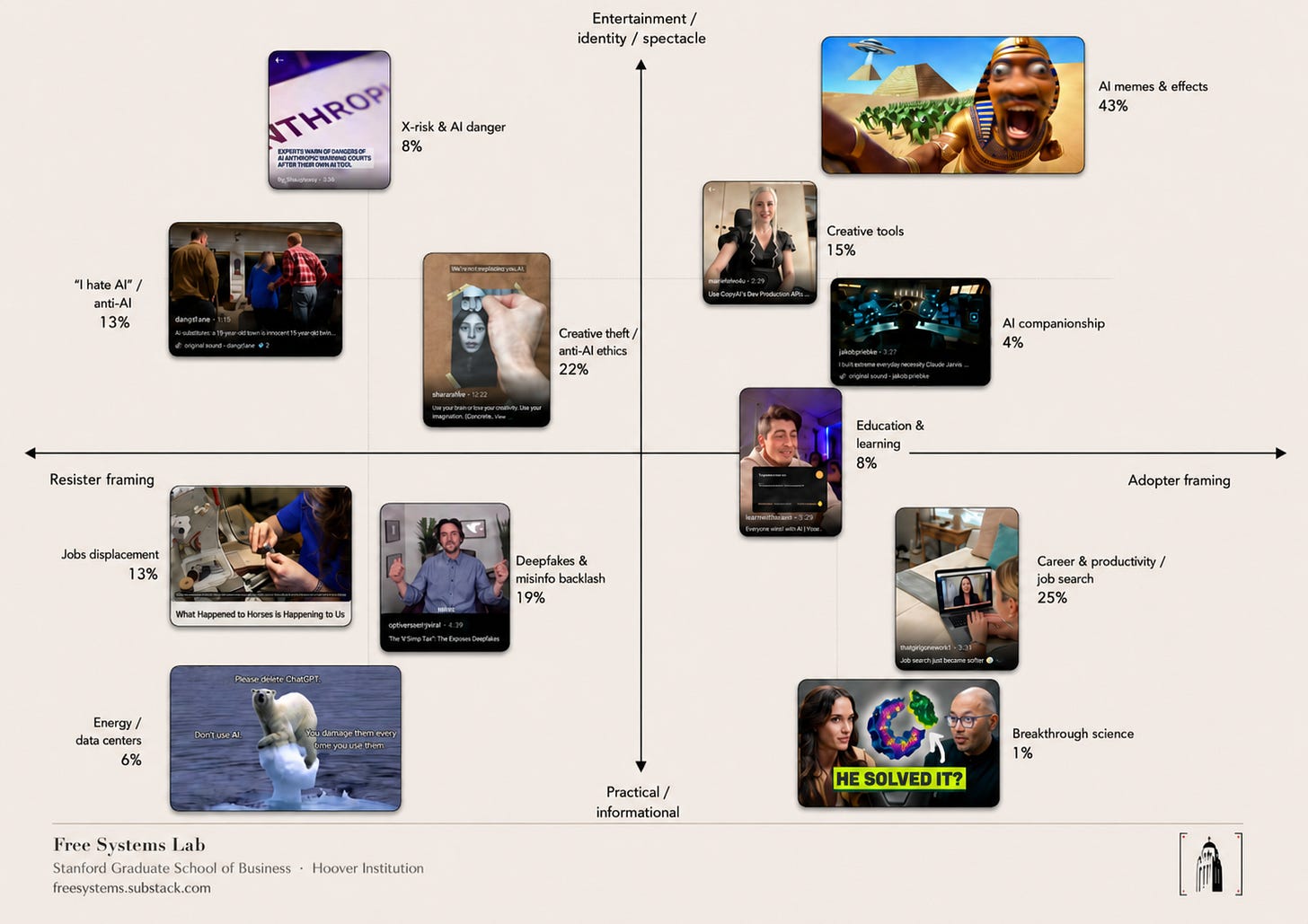
To categorize them and analyze sentiment, we first transcribed them using Whisper. Each video was then classified by large language models (Claude Sonnet 4 and GPT-5) in successive passes, first a relevance/stance filter, then a strict precision-first re-verification with confidence scoring, and finally assignment to a fixed topic taxonomy, with classification thresholds calibrated against hand-audited samples. We restrict the analysis to videos posted in 2026 and weight every topic by reach (total views and plays).
Sentiment is a crude object, and after watching many of these videos, we think it’s more appropriate to say that the ‘positive’-coded videos reflect the views of “adopters” and that the negative-coded ones reflect the views of “resisters,” rather than saying that the video are uniformly positive or negative in their affect towards AI.
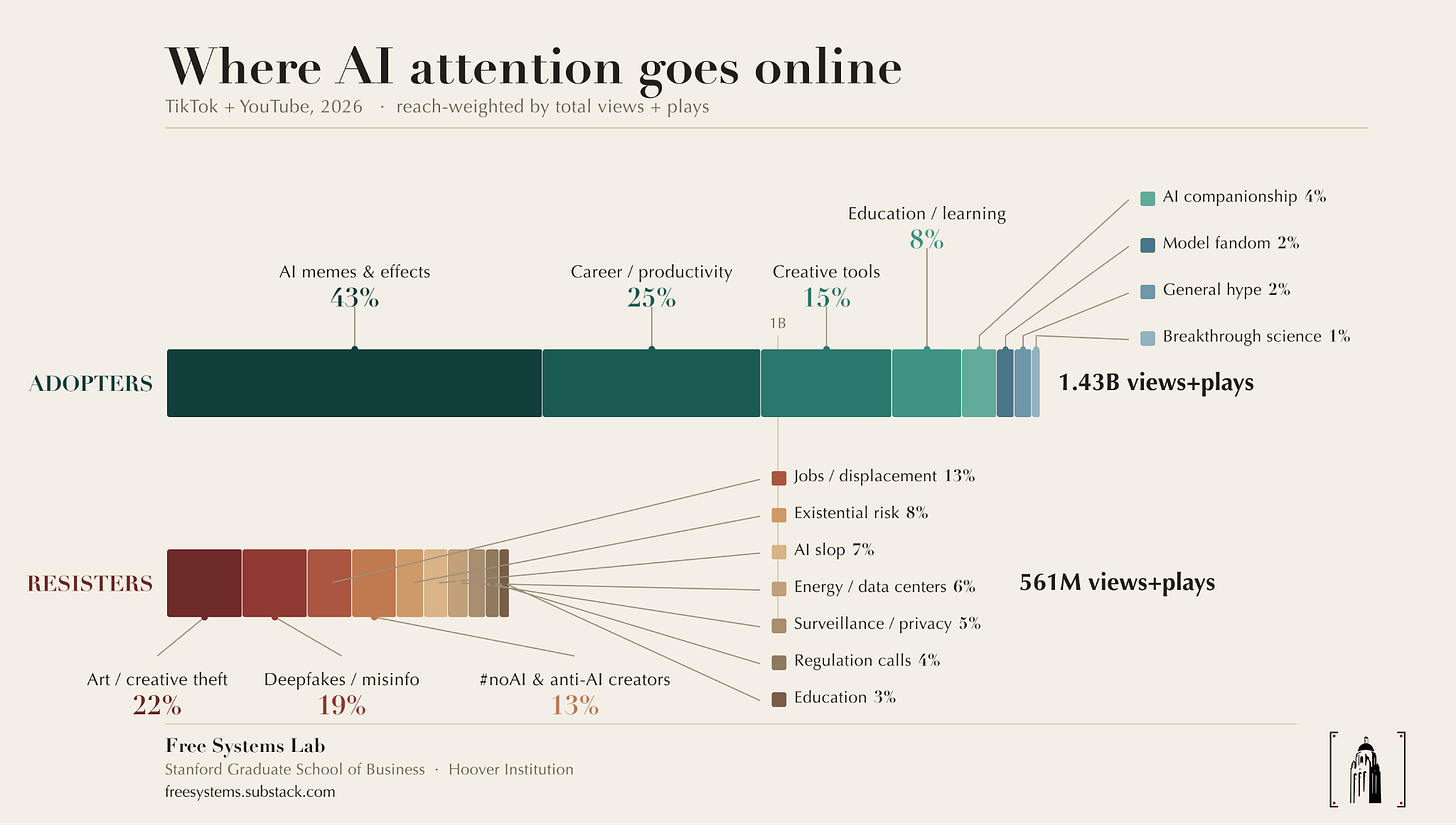
And the results are interesting! We find that videos ‘adopting’ outnumber those ’resisting’ it, by roughly a 3 to 1 margin. This doesn’t mean that sentiment towards AI in general is positive—as we’ll explore below, there are many ways to interpret these patterns. But this certainly shows evidence that considerable AI absorption is already well underway, largely beneath the radar of the backlash narrative.
What Adopters talk about on YouTube and TikTok
So what is the ‘adoption’ content actually about? It’s not quite the high-minded techno-optimism of the SF tech bubble crowd.
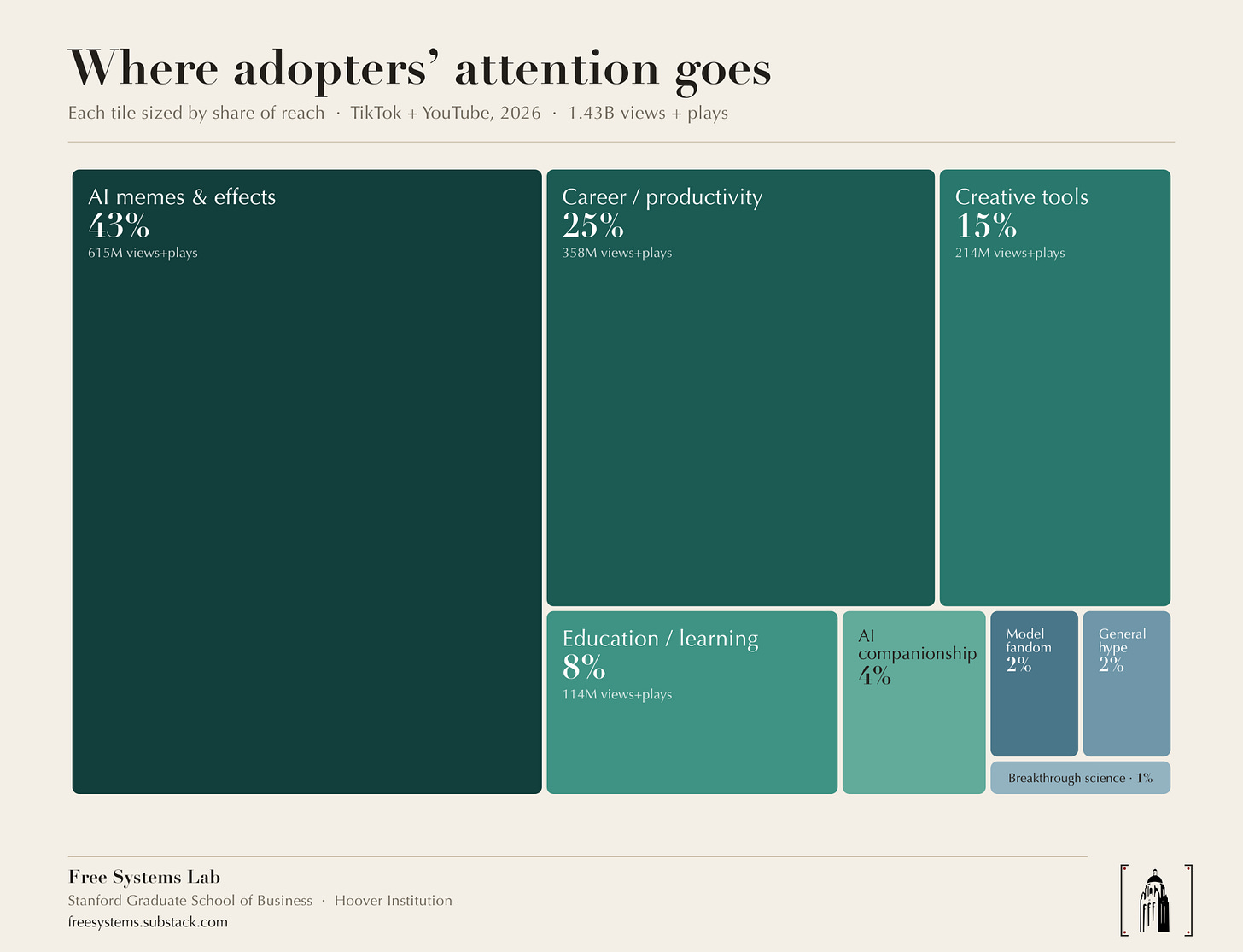
AI memes & effects - 43%
The most popular category is what we call “AI memes & effects”---basically, fun and goofy videos where people show off different kinds of AI-generated content. Some may call this ‘AI slop’ or ‘brainrot’, but AI is clearly opening up an entire pipeline of new meme-generation and storytelling opportunities which is now baked into the everyday scrolling experience of those on Youtube and TikTok. Here are two fun, representative examples.
TikTok — “Now it’s pandas turn 😂” (Lumi AI-dance animals)

@lumi.0102Now its pandas turn 😂 #funnyai #tiktokfunnyvideo #aidance #tiktokusa #LUMI
 Tiktok failed to load.
Enable 3rd party cookies or use another browser
**YouTube **— “Idiots Laugh At Unusual AI Videos” →
These are obviously frivolous, but we shouldn’t discount them for that. This is a major experience Americans are having with AI: fun, goofy, creative content that is designed to provoke and entertain.
Career / productivity - 25%
The next biggest category are videos that talk about people using AI to help them find jobs, get their work done faster, or generally help them manage their lives more effectively. Below are two interesting examples:
- TikTok — “job search just became unfair 💀” (AI quietly winning the hunt) →
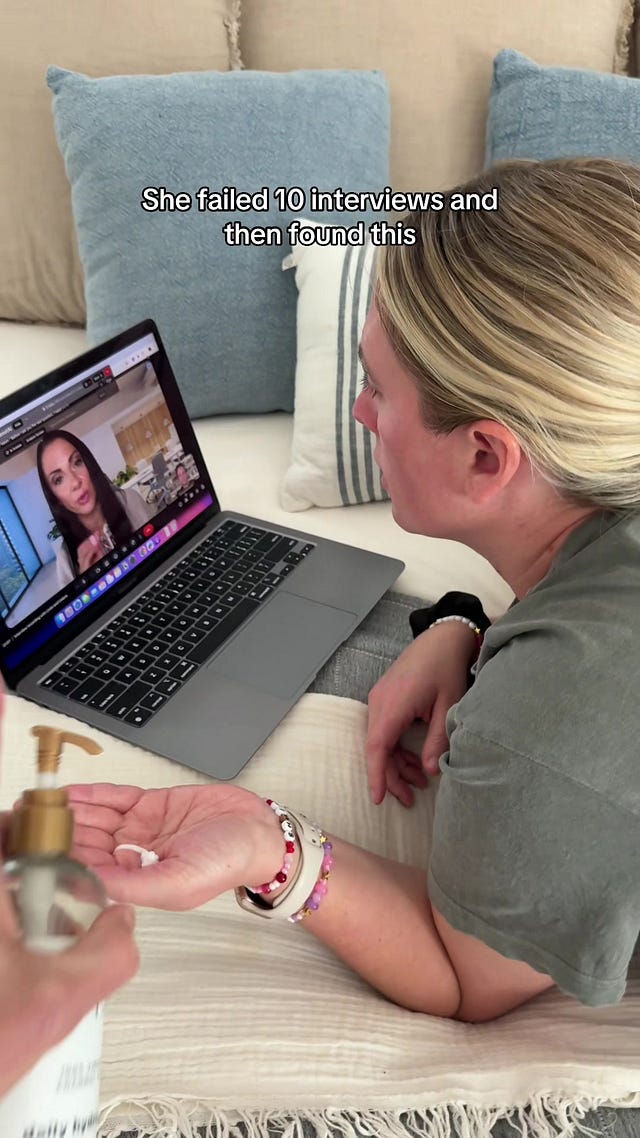
@thatgirlgetshiredjob search just became unfair 💀 #parakeetaipartner #jobsearch #jobai #career #fyp
Tiktok failed to load.
Enable 3rd party cookies or use another browser
- YouTube — “ChatGPT acted as my financial advisor and helped me build a get-out-of-debt strategy” →
This kind of “self help” content is not necessarily glamorous, and is exactly the kind of thing that the elite narratives are likely to miss but that is actually important to people. In particular, it showcases how people are using AI to get a ‘leg up’ in their lives---finding jobs, working faster, managing their finances, navigating systems that feel stacked against them. This sits in direct tension with the job displacement content on the resister side.
Creative tools - 15%
Close behind is a genre of videos in which creators share interesting ways that they’ve used AI models to create new things—like an AI edit of a movie, or a new Minecraft trap.
- **TikTok ***“Motion Control is Crazy”* — a Game-of-Thrones AI edit →

@aidanstanik.aiMotion Control is Crazy #motioncontrol #ai #higgsfield #gameofthrones
Tiktok failed to load.
Enable 3rd party cookies or use another browser
- YouTube — “AI Generated Minecraft Traps” (genuine showcase, building game content with AI) →
These often seem to feel especially positive, because they come from creators who are excited to share what they’ve been able to do with AI. This sort of content faces sharp opposition on the resister side, but has been wholeheartedly embraced within certain pockets of social media.
Education and learning - 8%
A smaller category includes videos where people show off things they’ve learned using AI, or ways that they use AI to teach themselves things.
- TikTok — “Learning epic riffs with Suno” (guitarist genuinely stoked to jam with AI) →
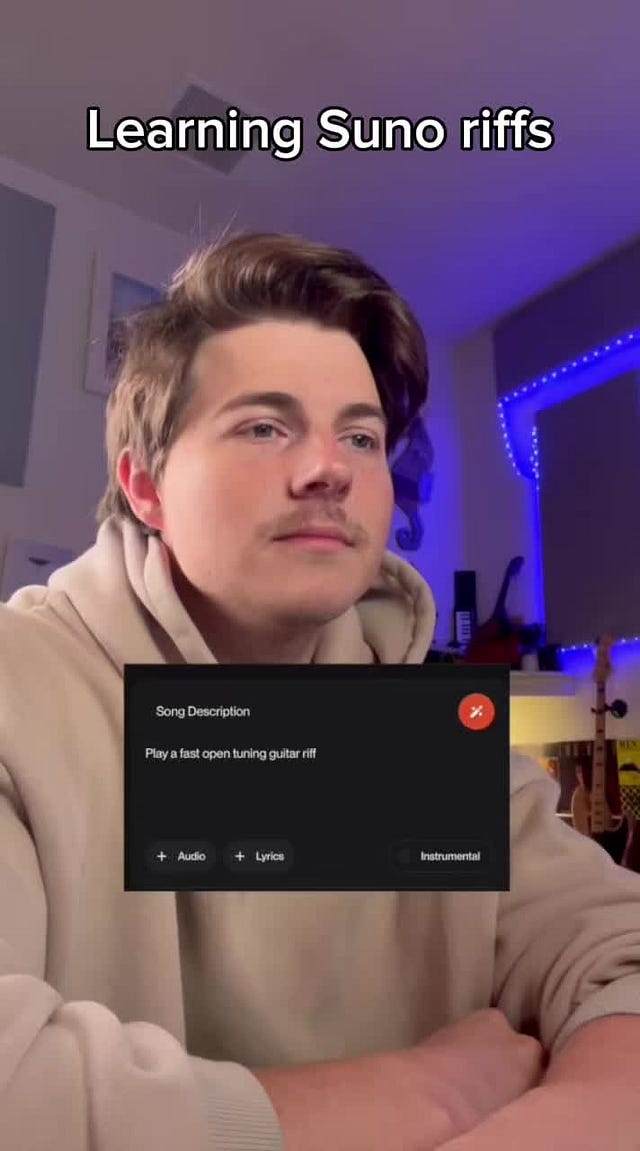
@dominicflynnguitarLearning epic riffs with @Suno
Tiktok failed to load.
Enable 3rd party cookies or use another browser
- YouTube — “ChatGPT… I feel like a fool [for not using it sooner]” (enthusiastic late-adopter) →
This is a use case that a lot of AI companies like to lead with—the personal tutor narrative, AI as democratizer of education. We see here that people are certainly using AI to learn, but it’s not the dominant experience.
AI companionship - 4%
A smaller and stranger category covers videos about people’s AI companions, ranging from quirky and weird to somewhat creepy.
- TikTok — “I just love coming home to my Claude ‘Jarvis’ 🥰” →
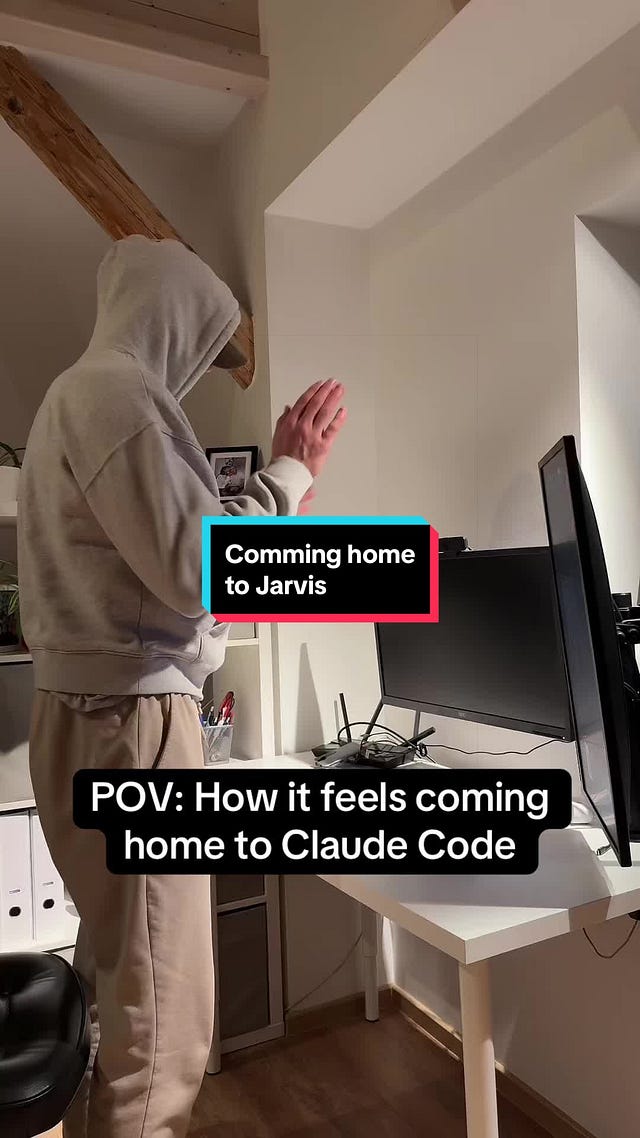
@jakob.robic5I just love coming home to my Claude Jarvis #claudecode #claude #ironman #ai
Tiktok failed to load.
Enable 3rd party cookies or use another browser
- YouTube — “flirting with AI again, but worse” (creator playfully smitten with their AI companion) →
Although many of these videos involve people excited about their AI companions, I would hesitate to ascribe overly positive qualities to this category. It certainly does confirm that the companionship phenomenon that journalists have been writing about is clearly real and visible in the data.
Breakthrough science - 1%
Finally, a very small category covers AI’s ability to advance science.
While scientific advances constitute probably the main positive opportunity the labs frame around AI, it is far from a major focus of the social media content people are seeing about AI.
What resisters talk about
Adopter videos stress how AI can be fun, how it can help you advance your career and be more productive, and how it can teach you new things. Those are pretty positive framings about AI for everyday people. But what about the significant number of videos from the resisters? Just because these negatives are far more negative does not imply that they line up neatly with elite narratives about the AI backlash—indeed, we find that they look quite different.
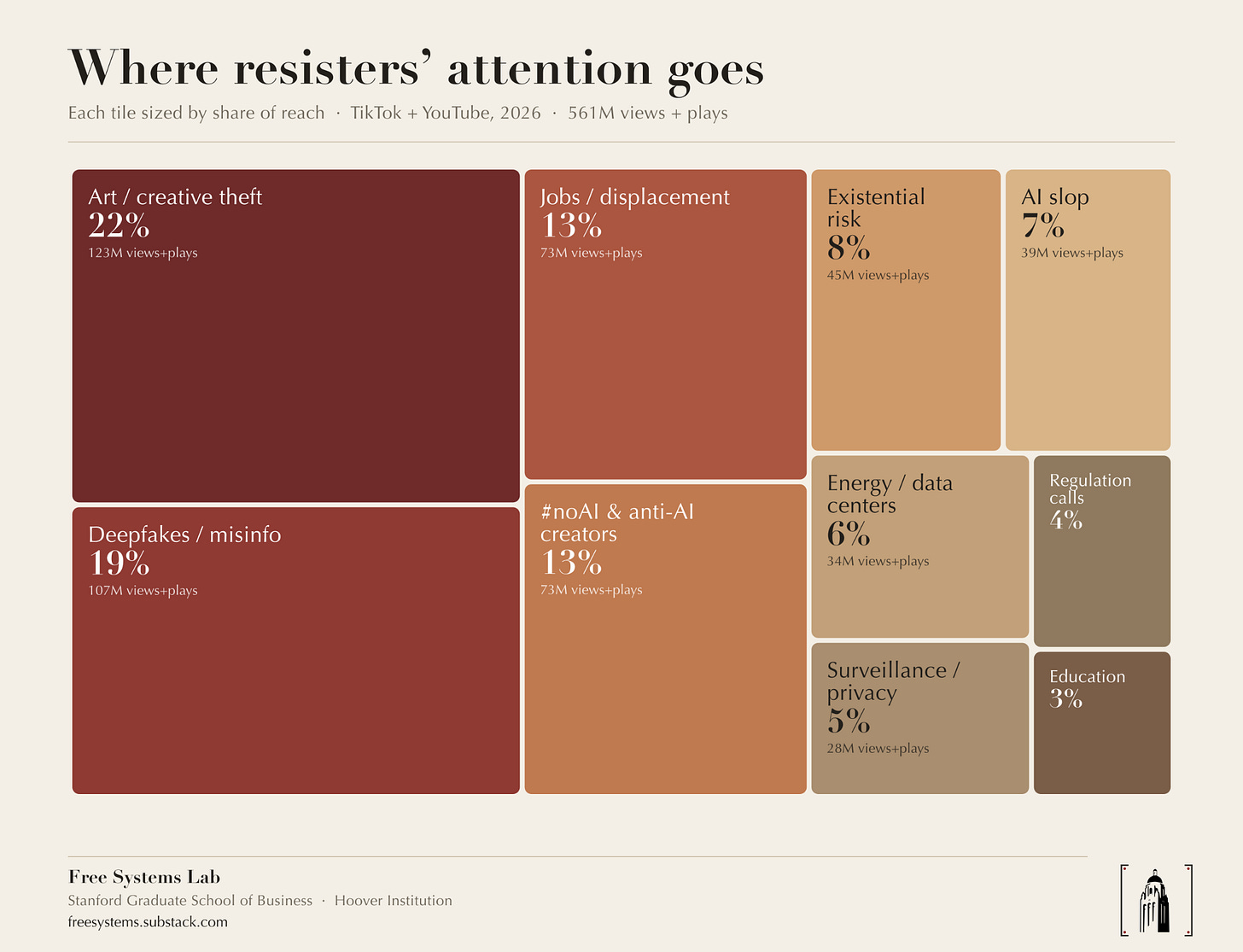
Creative theft - 22%
The largest and most organized category of AI backlash content centers around the ways that AI constitutes creative theft and harms art. On TikTok, this community shows signs of real organization: they use hashtags like #noAI and #stopAIart, and they seem to have a real social structure—with shared trends and in-group rituals, like encouraging the commissioning of fellow artists, and coordinating on takedown requests for AI content.
- TikTok — “Use your brain. Use your creativity… **Don’t steal other people’s work. **Pick up a pencil.” →
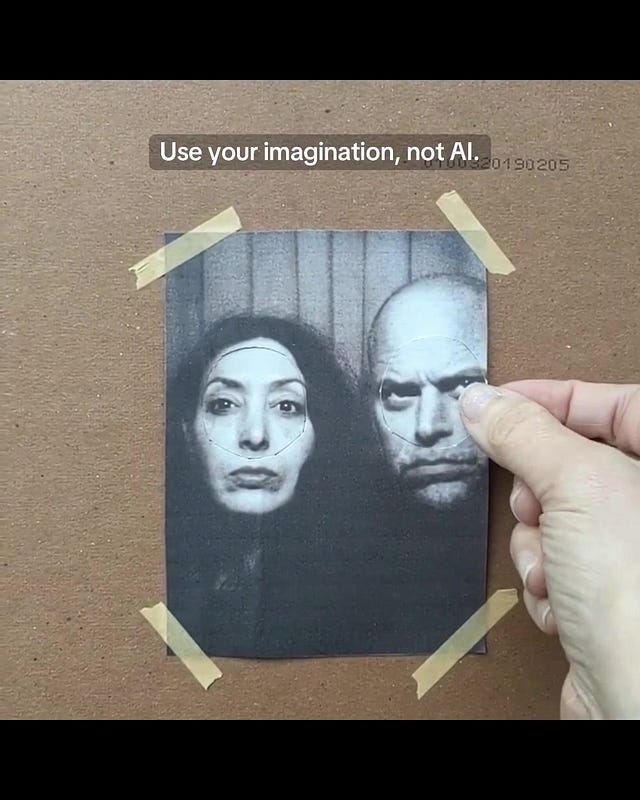
@allisonrtylerUse your brain. Use your creativity. Use your imagination. Experiment. Use your hands. Stop needing instant gratification. Invest the time to get good at something. Try something new. Don’t steal other people’s art. Go play. Don’t be a jerk. You’re better than that. #darkaesthetic #whimsy #realart #strangecore #noai
Tiktok failed to load.
Enable 3rd party cookies or use another browser
YouTube — “Disney’s New AI Move Has Made The Art Community Furious“ (studio raining on artists’ work) →
TikTok — campaign against AI-generated art, we commissioned this animatic… to support real creatives” →
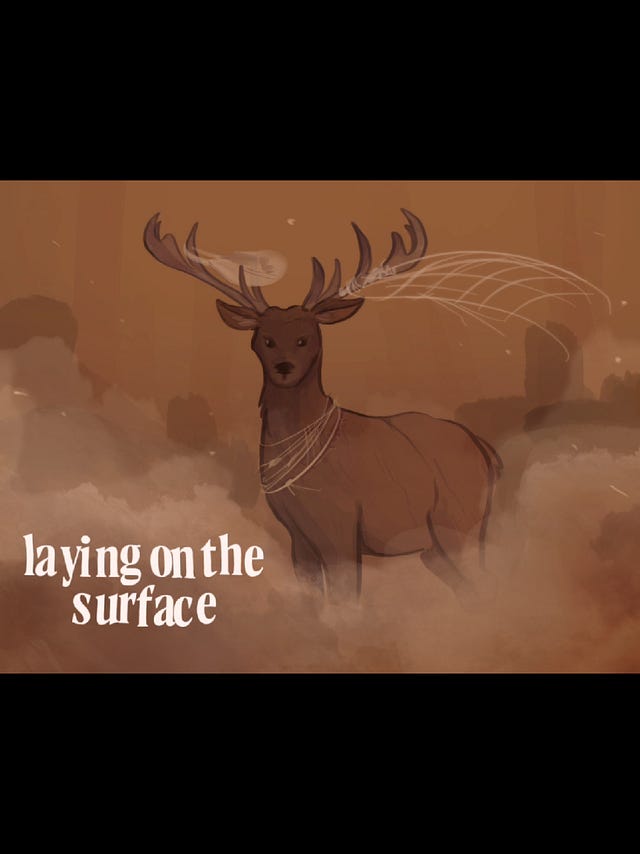
@starmapsintergalacticAs part of our campaign against AI-generated art, we commissioned this animatic from @Eli to show our continued support for real creatives, especially in a world that may one day look like the one in our game. Starmaps Intergalactic is a sci-fi gamefollows humanity after Earth’s collapse and a Resistance fighting to return home. We have been working on this game for the past 3 years and happy to say we're getting closer to releasing. Lucy’s story is just the beginning, follow the story as she tries to get home. And play the game to fight with the Resistance. 🎨 Animation Created from: @u3eli Follow for Game Updates and More Lore. The best place for science fiction lovers and book readers. #noaiart #supporthumanartists #indiegamedev #digitalart #BookTok
Tiktok failed to load.
Enable 3rd party cookies or use another browser
Deepfakes and misinfo backlash - 19%
The next largest category covers concerns about deepfakes and misinfo. Often these are news reports, but individual creators get involved, too.
- TikTok — “The ‘3-Finger Test’ That Exposes Deepfake Scammers Instantly” (Cybersecurity Girl) →
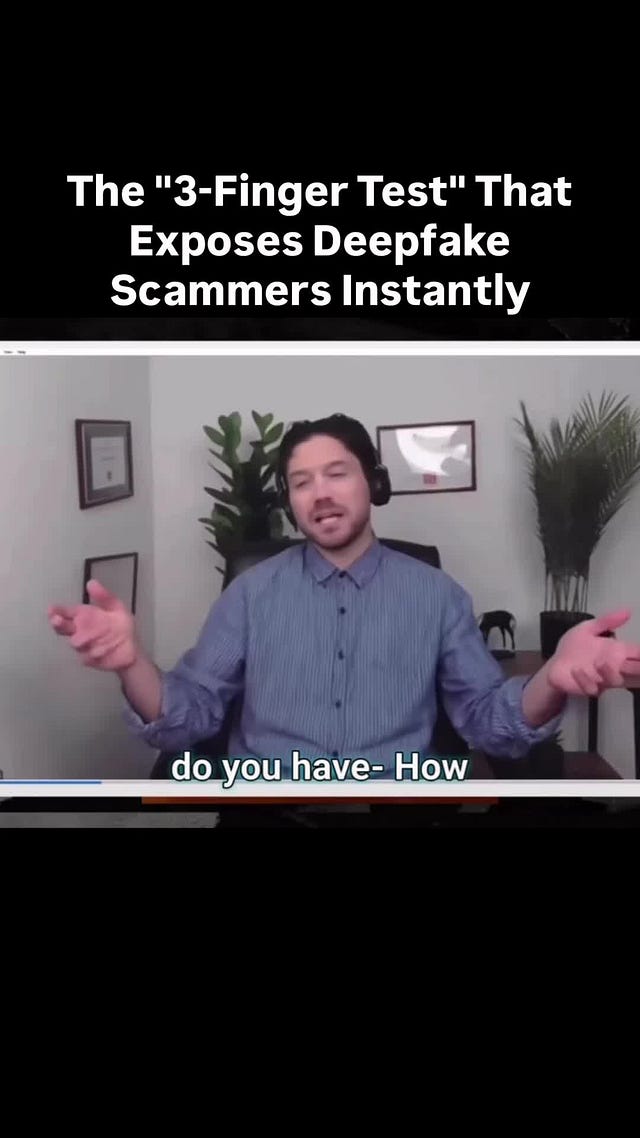
@cybersecuritygirlThe “3-Finger Test” That Exposes Deepfake Scammers Instantly Follow @cybersecuritygirl for more online safety tips Original footage from @huntresslabs #deepfake #scams #news
Tiktok failed to load.
Enable 3rd party cookies or use another browser
- YouTube — “A.I. Content Is Getting Too Good.” →
Jobs displacement - 13%
About 13% of the resister videos talk about job displacement in various ways—ranging from documenting how AI can do things that specific creators used to be able to do, to offering broader economic takes on the situation.
- TikTok — “IM BEING REPLACED BY AI” (gaming creator camman18) →
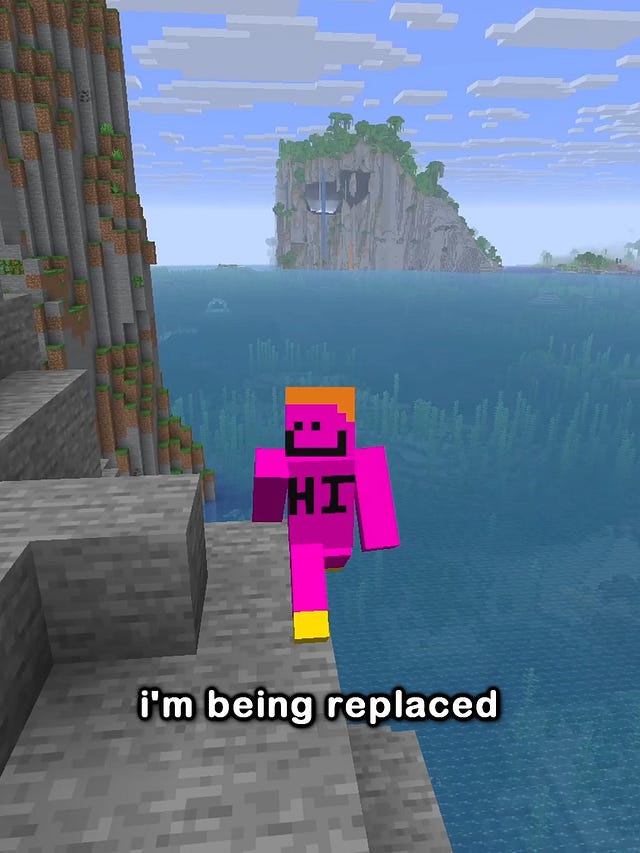
@camman.18IM BEING REPLACED BY AI
Tiktok failed to load.
Enable 3rd party cookies or use another browser
- YouTube — “What Happened to Horses Is Happening to Us” →
These videos feel different from elite discourse around job displacement in a few ways. First, many of them are personal, talking about how AI has taken a specific person’s job. They often specifically assign blame, naming a particular person (like Mark Zuckerberg) or a particular group (like “Silicon Valley tech bros”). And second, interestingly, the videos—particularly on TikTok—often focus not on the “white collar wipeout” that the AI labs have been warning about, but more about blue collar and service jobs. Finally, they also often have a youth element—with lines like “our generation is cooked” often appearing.
I hate AI - 13%
The next category is general anti-AI content. This category bumps up against the first category—inveighing against AI slop and how it’s harming the world—but doesn’t focus on one specific grievance the way the theft discussion does.
- TikTok — “ai disgusts me, anyone who uses it is immoral“ →
@daisyskayaai disgusts me, anyone who uses it is immoral #chatgpt #antiai #climatechange #globalwarming #foryoupage
Tiktok failed to load.
Enable 3rd party cookies or use another browser
- YouTube — “Every Reason Why I Hate AI and You Should Too” →
These videos are often quite vitriolic. They certainly provide a window into why and how an anti-AI political movement in the US might grow. Clearly, there is a group of Americans with very strong, negative emotions around AI. You feel this very strongly watching their videos.
X-risk - 8%
Videos about existential risk are far less common on social media than in elite, EA-coded “doomer” discourse on X. Interestingly, when they do appear, though, they often trickle down from precisely that community; many of the most popular x-risk videos are straightforward videos of doomer celebrities like Geoffrey Hinton opining on x-risk, or videos summarizing the views of major AI figures on the subject.
**TikTok **— “EXPERTS WARN OF DANGER IF ANTHROPIC’S NEW MODEL GETS INTO THE WRONG HANDS!” (the viral “Mythos” too-dangerous-to-release story, Ultron edit) →
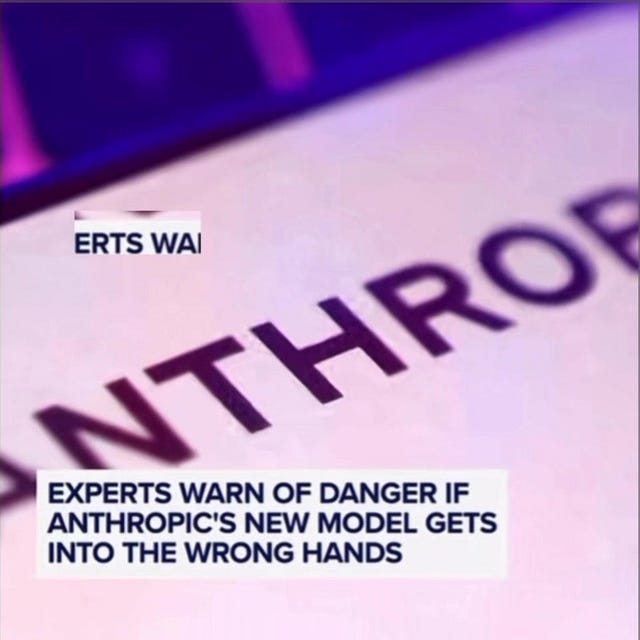
@ibig_sweepEXPERTS WARN OF DANGER IF ANTHROPIC’S NEW AI MODEL GETS INTO THE WRONG HANDS! Ultron Edit #edit #news #aitakeover #invincible #xyzbca
Tiktok failed to load.
Enable 3rd party cookies or use another browser
**YouTube **— “Godfather of AI: We Have 2 Years Before Everything Changes!” (Hinton) →
But, social media being social media, there are also some even more dramatic takes, like videos applying spiritual analyses to AI:
**TikTok **— “Watch out for AI, it can be very demonic” →
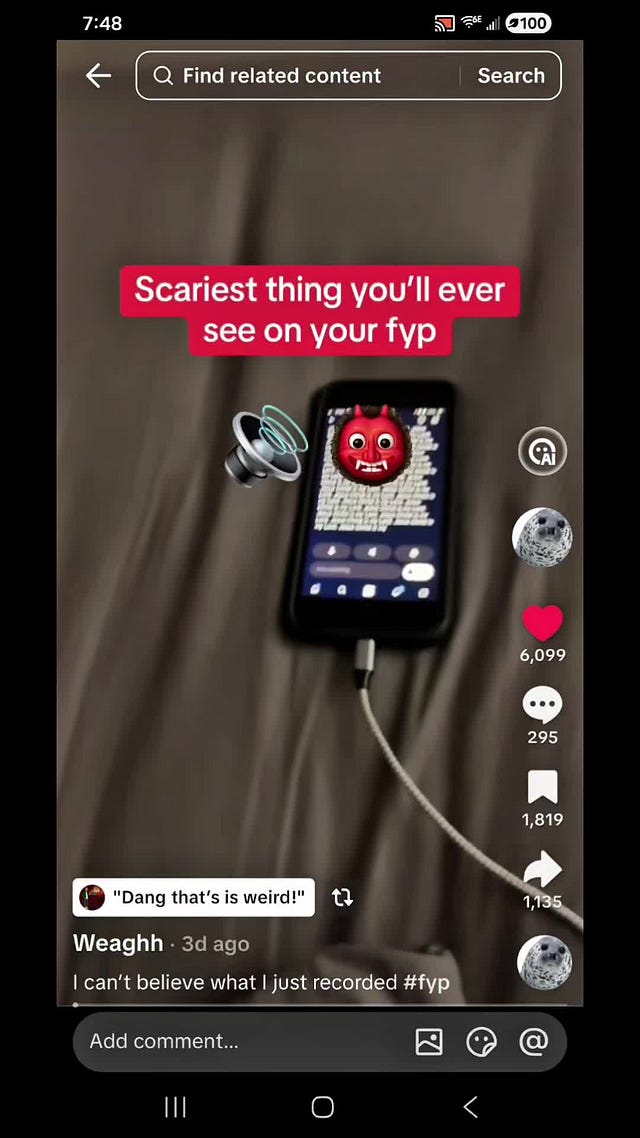
@hescoming_backsoonWatch out for AI it can be very demonic. #ai #demonic #god #fyp #viral
Tiktok failed to load.
Enable 3rd party cookies or use another browser
Energy / data centers - 6%
Environmental concerns related to AI data centers are only a small proportion of the content, and the most popular examples showcase how these narratives can be stretched to popular extremes.
- TikTok — “Please stop using AI, you’re harming them. Delete ChatGPT and use Ecosia instead. Polar bears, penguins… are dying.” →
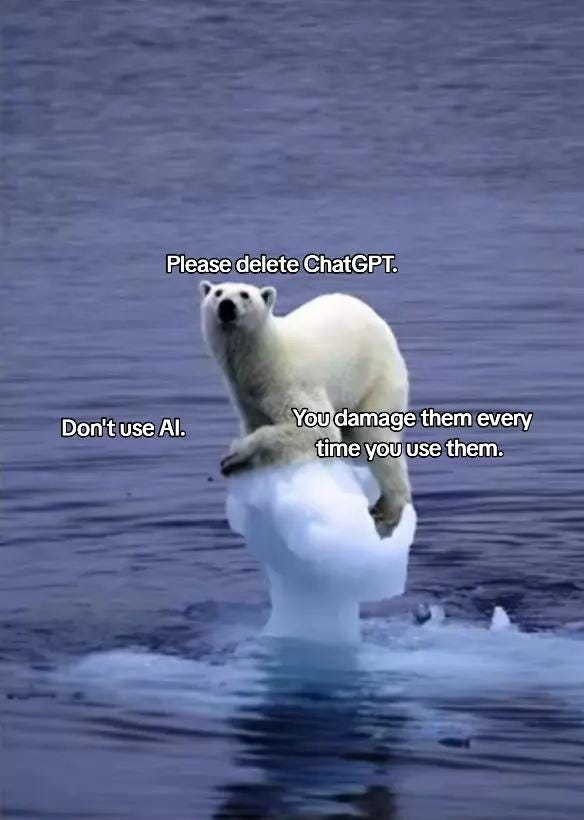
@rby_846Please stop using AI, you're harming them. Delete ChatGPT and use Ecosia instead. Polar bears, penguins, and many other animals are dying. We only have 3 years to save them.#polarbear
Tiktok failed to load.
Enable 3rd party cookies or use another browser
- TikTok — “That water bottle on your desk? That’s not going to exist in a couple of years” (AI is draining fresh water) →
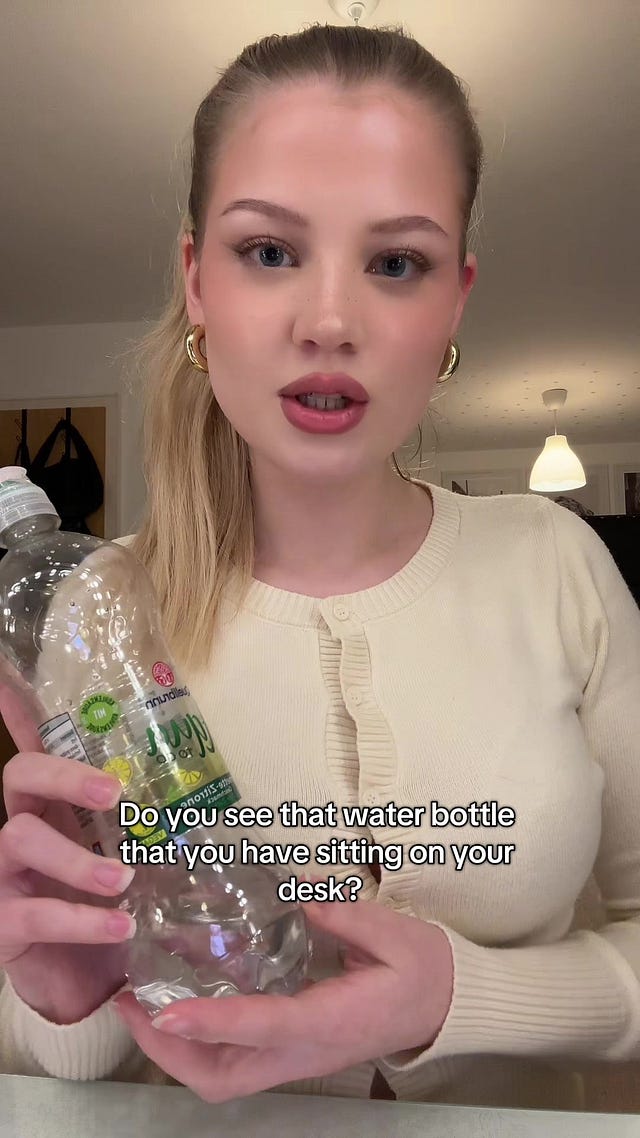
@ecowithdanaI wish more people were aware of this #chatgpt #ai #environment #ecogpt #fyp
Tiktok failed to load.
Enable 3rd party cookies or use another browser
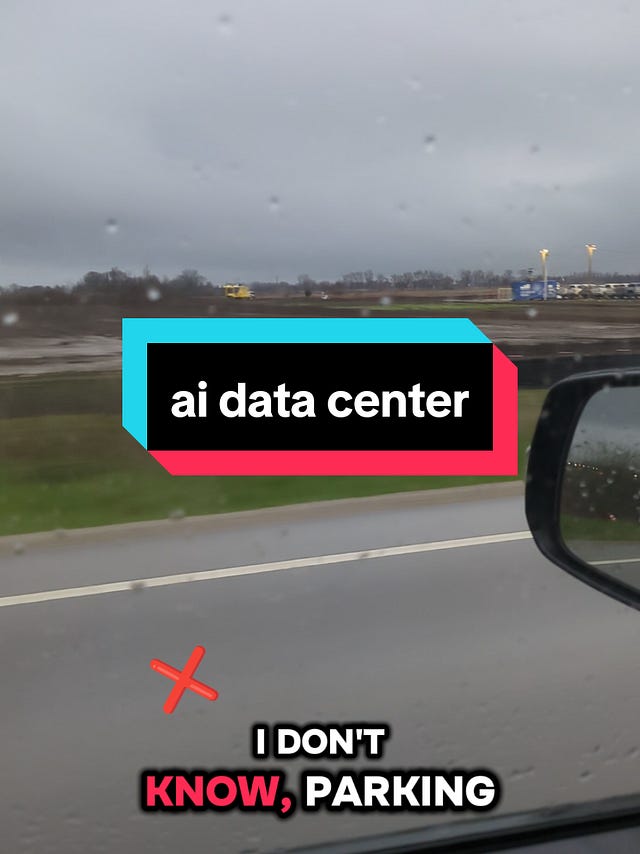
There are also videos with more of a NIMBY vibe (not in the pejorative sense) complaining about how data centers ruin the landscape.
- TikTok — “🤬 This used to be beautiful rural farmland. Now it’s an AI data center in the making.” (Meta) →
@saltyspiritsage🤬This used to be beautiful rural farmland. now it's an AI data center in the making. #aislop #ai #meta #fyp #datacenter
Tiktok failed to load.
Enable 3rd party cookies or use another browser
A bottom-up view of adopters and resisters
Together, this “census” of TikTok and YouTube reveals a complicated ecosystem of AI content where adopter content outnumbers resister content 3 to 1, and where the narratives getting the most play with users look quite different from the narratives about AI that our elites are advancing.
On the positive side, you won’t hear many AI lab leaders or politicians talking about AI as a more mundane source of entertainment or as a self-help guide for job interviews, but these are major categories on social media. On the negative side you might hear them occasionally mention artistic theft or AI slop, but not as often as they mention job loss and data centers—yet these topics are flipped in their importance on social media.
That doesn’t mean we should dismiss elite narratives. Many of the most important policies get thrashed out in elite-dominated discussions long before they make it into the broader public sphere. But when elites claim to be taking up the mantle of everyday people—when they say their policies are urgent because “the American people” think X, Y, or Z—we should be skeptical and look for data. Having spent many hours analyzing and watching social media videos about AI, I am confident in saying that the experience of AI out there in American society is far different—and weirder, yet somehow almost more normal?---than the elite narrative would suggest.
Thanks for reading Free Systems! Subscribe for free to receive new posts and support my work.
这条对你有帮助吗?