We Can Still Stop California's 3D Printer Surveillance Scheme
摘要
加州众议院已通过 AB 2047 法案,要求 3D 打印机强制安装监控软件,审查所有打印文件。EFF 指出,尽管修正案取消了个人转售的刑事处罚,但核心问题未解决:开源替代软件仍被变相刑事化,仅当包含审查功能时才被允许;性能标准从 “有效阻止规避” 降为 “大幅减少可预见规避”,实质上承认技术不可行;法案为好莱坞等商业用户提供豁免,却将独立创作者、角色扮演者等排除在外,并可能因打印监控导致企业原型与设计泄露。EFF 呼吁公众联系州参议员,阻止该法案进入下一阶段。
荐读理由
内容主要性质命中反价值第1条:纯标题党蹭热点。EFF用夸张标题‘We Can Still Stop’煽动读者,文章却反复承认法案已降级性能标准、删掉真正可行要求、无实际效果,只剩‘模糊第三者标准’和‘自监控’,是典型的‘还能止损’情绪包装快讯
原文
We Can Still Stop California’s 3D Printer Surveillance Scheme
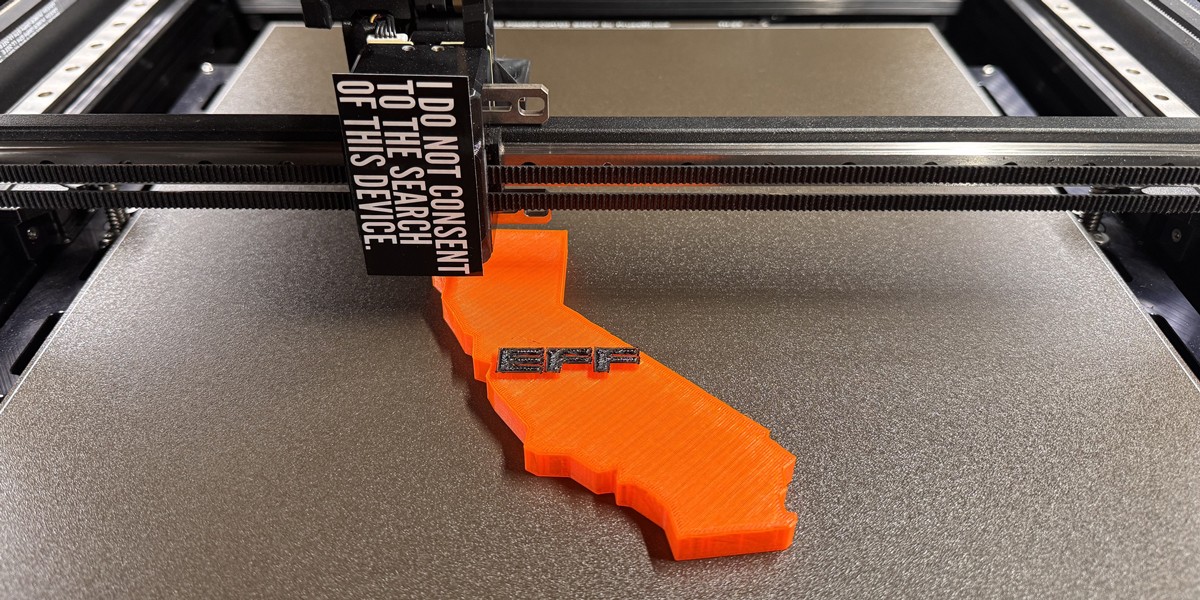
Ignoring EFF’s warnings about the dangers and impossibility of implementing a new mandate for 3D print surveillance software, the California State Assembly has signed off on legislation to do just that. In the process, legislators amended the bill to make it even more confusing, while failing to address the risks to privacy, speech, and consumer rights. We must renew our call on legislators to drop this bill as it heads to the state senate, and protect the tools of creators in the state.
Tell CA Senators to stand with creators
What’s changed about the bill?
Since we first wrote about AB 2047, a bill targeting 3D printers for the rare, impractical, and already outlawed practice of manufacturing firearms without a license, it has picked up several amendments. Some are welcome changes, but most have only highlighted the technocratic absurdity of the proposed scheme. Our core concerns—that this mandate censors lawful speech, builds out corporate surveillance, and criminalizes open source experimentation—have not been remedied.
Removes criminalization of resale
Starting with one silver lining, the current bill includes a carveout for the private resale of devices. The original bill would have made it a criminal offense for an individual to resell 3D printers purchased before this mandated censorship and surveillance software. This is a clear win for the 3D-printing community, but it is unfortunately not enough.
Ineffective carveouts for open source
One of the most dangerous aspects of the bill is that it criminalizes individual users for common practices, like creating and using alternative open source programs with their 3D printer. New amendments provide a carveout for the use of an open source tool, but only if it includes compliant censorship software. The bill burdens open source developers with ambiguous and unrealistic standards for print blocking, and continues to create a chilling effect for open source users.
Removes any actual requirement to work
To reiterate—there is no world where the mandated technology actually works as intended. It will both block lawful use of 3D printers, and allow firearms to be printed by anyone determined to do so. There is no amendment that can change this reality.
Instead, the current bill simply drops the pretense that this mandate is expected to work. The performance standard of algorithms changed from “effectively prevent[ing] a technically skilled user from evading [the algorithm]” to “substantially reduce the likelihood of foreseeable circumvention attempts…” The bill will still require all prints to be surveilled, but instead of testing efficacy against a skilled user, it just plays whack-a-mole with the (literally) infinite number of circumventions that any user can employ.
Further, the bill now leaves us with an unclear process that relies on non-governmental third parties to define standards, and now relies on manufacturers and resellers to self-police.
Hollywood gets a cut
The bill includes yet another carve out for commercial users. This time for the entertainment industry, which makes extensive use of 3D printers for props and costumes.
That’s fine for big studios, but it leaves out indie filmmakers, cosplayers, and many other small creators.
This is simply a defensive edit to limit corporate opposition. There isn’t a clear division in 3D-printing between consumer and commercial tools. These are general purpose tools which might be picked up by a prop department of a big studio, or an artist getting ready for Comic Con. Indeed consumer level products are not only used by amateur artists and engineers developing their skills. Commercial 3D printers, like their traditional 2D equivalents, are frequently used in workplaces, as well as by professionals honing their skills or just trying to get some work done at home.
Commercial carveouts hands printer manufacturers the ability to sell a more expensive tier of printers, locking-in and up-charging their commercial customers. Some of those customers will choose to buy general retail versions, but that carries its own price: increased risk of IP theft as all printed files are surveilled the same way they are for hobbyists. That means a real risk of businesses leaking any prototypes or new designs to not only the printer manufacturer, but potentially snooping governments and/or the general public through data breaches.
Demand your senator oppose AB 2047
This updated version of AB 2047 downgrades performance standards and removes oversight while still threatening privacy and choice for users of 3D printers. A printer surveillance system won’t work for its intended purpose, and will only harm law abiding users.
Act now to demand your senators to vote no on this ineffective and invasive bill.
Tell CA Senators to stand with creators
Related Issues
Tags
Related Updates
The NO FAKES Act Could Silence Satire, Commentary, And News
The NO FAKES Act is supposed to target harmful AI-generated impersonations. But in reality, it will make it easier to suppress commentary, satire, and other lawful speech. That's why EFF has signed a letter urging the Senate Judiciary Committee not to advance the bill in its current...
Congress Just Rushed Through a Disastrous Copyright Office Overhaul
In a voice vote earlier this week, the House of Representatives passed H.R. 6028, the “Legislative Branch Agencies Clarification Act.” The legislation is presented as a technical reorganization of some government agencies, but it’s much more than that. H.R. 6028 would fundamentally change the U.S. Copyright Office, and not...
Enshittification Merch That Actually Fights Enshittification
There are now enshittification pins and stickers in the EFF shop, and all proceeds go directly to EFF's work defending digital rights. When someone sees the enshittification emoji, it signals that you understand what's happening to the internet, and that you know we can do better.

Tell Congress: Just Say No to NO FAKES
The Senate Judiciary Committee is set to consider and vote on the Nurture Originals, Foster Art, and Keep Entertainment Safe Act (NO FAKES). Instead of targeting the real privacy harms posed by AI-generated replicas, this law would create another layer of internet censorship on top of the already existing...
California’s AB 412 Still Demands Developers Do The Impossible
****California lawmakers are again considering A.B. 412, a bill that would require AI developers to identify and disclose copyrighted works used to train generative AI systems.The problem this year is the same as last year: it’s practically impossible...

A Bridge to Somewhere: How to Link Your Mastodon, Bluesky, or Other Federated Accounts
One of the central promises of open social media services is interoperability—the idea that wherever you personally decide to post doesn’t require others to be there just to follow what you have to say. Think of it like a radio broadcast: you want to reach people and don't care where...
The Open Social Web Needs Section 230 to Survive
The paradigm shift being built with the Open Social Web can put communities back in control of social media infrastructure, and finally end our dependency on enshitified corporate giants. But while these incumbents can overcome multimillion-dollar lawsuits, the small host revolution could be picked off one by one without the...
Copyright and DMCA Best Practices for Fediverse Operators
People building the future of the social web—interoperable and decentralized—need to protect themselves against copyright liability. This post gives an overview of the steps to take. It’s meant for operators of Mastodon and other ActivityPub servers, Bluesky hosts, RSS mirrors, and other decentralized social media protocols, and developers of apps...
Stop New York's Attack on 3D Printing
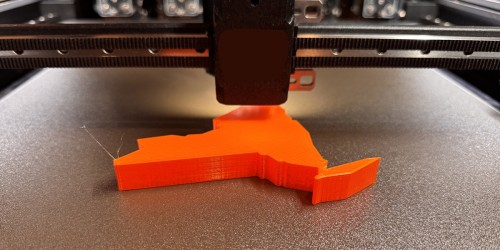
New York's proposed 2026-2027 budget currently includes provisions that will require all 3D printers sold in the state to run print-blocking censorware—software that surveils every print for forbidden designs. This policy would also create felony charges for possessing or sharing certain design files. The vote on the state budget could...
The Dangers of California’s Legislation to Censor 3D Printing
California’s bill, AB 2047, will not only mandate censorware on all 3D printers; it will also criminalize the use of open-source alternatives. Repeating the mistakes of DRM won’t make anyone safer, but it will hurt innovation in the state and risks a slew of new consumer harms ranging from surveillance...
这条对你有帮助吗?