Solar rail could become common in Europe after successful trial in Switzerland
摘要
瑞士初创公司 Sun-Ways 在 Buttes 村活跃铁路轨道间铺设 100 米光伏板,48 块面板合计 18 kWp,一年后产出约 16,000 kWh,相当于英国普通家庭全年用电量。面板倾斜损失约 10%,但已解决抗反射、传感器监测和列车刷清洁问题,无需特殊维护。电力目前送入电网,公司正开发直接回馈铁路系统的方式。继瑞士后,已与意大利伙伴签约,计划近期启动试点,并获韩国政府批准,与荷兰、中国、印度和新加坡公司讨论合作。
荐读理由
Sun-Ways 瑞士试点一年产出约 1.6 万 kWh(相当于英国一个家庭全年用电量),斜面损失仅 10%;发电直接并网,传感器+防裂+刷洗解决安全风险,已获意大利国家铁路 Rete Ferroviaria Italiana 合作意向;证据属中级新闻摘要,确认了该技术可行性,但未提供可迁移的具体架构、工具或代码细节,无法直接落地到独立开发项目
原文
Italy could be the next country to build a solar railway after Switzerland’s successful trial
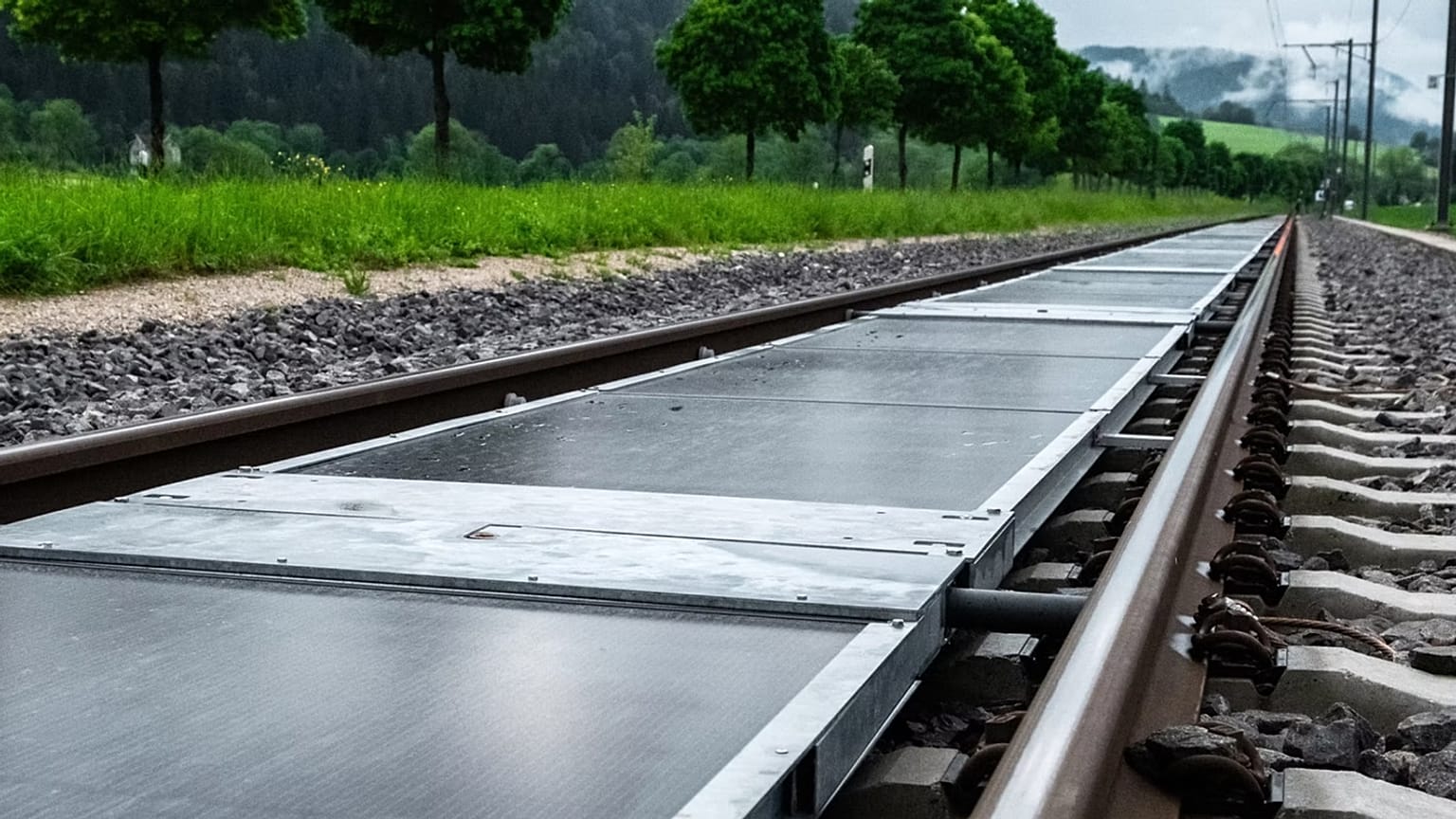
- Solar panels on an active railway track in Switzerland - Copyright Sun-Ways *
Copyright Sun-Ways
Published on 05/07/2026 - 7:00 GMT+2•Updated 06/07/2026 - 12:14 GMT+2
Solar railways could soon become commonplace in Europe, following a successful trial in Switzerland.
Europe’s infrastructure is embracing the renewables boom, with one company determined to transform the continent’s railway lines into mini solar farms.
ADVERTISEMENT
ADVERTISEMENT
Last year, Swiss start-up Sun-Ways unveiled the world’s first-ever solar railway after rolling out 100 metres of photovoltaic (PV) panels in between active tracks in Buttes, a village in the Val-de-Travers district.
Originally planned as just a three-year trial, the railway was fitted with 48 specially-designed solar panels with a combined power of 18 kWp.
However, the positive results yielded just one year into the trial mean the installation of a permanent system along the railroad track is now likely, Euronews Earth has been told.
Are solar railways efficient?
Solar panels are often installed at a specific angle to ensure they absorb the maximum amount of sunlight throughout the year.
In Spain, for example, the optimal angle for efficiency is between 30° and 35°. According to a 2022 study published in Science Direct, a 34° tilt on solar panels in the Iberian Peninsula resulted in annual production losses lower than one per cent.
It’s why sloped rooftops are naturally convenient locations to install panels – while garden fences, balconies and flat roofs will generate less energy in comparison.
Sun-Ways estimates that the loss of production due to the lack of inclination of the railway panels is only around 10 per cent. Still, in one year, the project has produced around 16,000 kWh.
Related
Rooftop solar can provide five hours of 'free' air conditioning a day. But is it green?
Europeans are making the most of cheap solar panels – by creating green garden fences
To put this into perspective, this is roughly the same amount of energy an average UK home uses in a year, where everything is powered by electricity (such as heating, hot water, lighting and appliances).
In theory, solar panels could be rolled out across the entirety of Switzerland’s 5,317 kilometre-long railway network – covering a size equivalent to 760 football fields or more than 50,000 times the trial coverage.
Sun-Ways estimates that this has the potential to produce around one Terawatt hour (TWh) of electricity every year, around two per cent of the country’s total energy consumption.
Are solar railways safe?
Transforming railway tracks into renewable energy hubs is no easy feat, and comes with its own set of unique challenges.
One of the biggest concerns, previously expressed by the International Union of Railways, is that the panels could suffer micro-cracks, lead to a higher risk of fires and distract train drivers due to reflections.
Sun-Ways has tackled these issues by building more resistant panels than what would be installed on rooftops, fitted with an anti-reflection filter.
Built-in sensors also ensure they work properly while brushes attached to the end of trains can remove dirt from the panels’ surface.
When asked if there were any issues within the first year of operation, Sun-Ways told Euronews Earth that “the plant worked perfectly” and that it didn't have to carry out any “special maintenance”.
“For this first pilot project, the electricity is sent directly to the grid,” the company adds. “But we are already working to reinject the electricity produced with Sun-Ways power plants directly into the railway substations or into the train traction line.”
Related
Turning closed coal mines into solar farms could power a country the size of Germany, report finds
‘Suddenly energy independence feels practical’: Europeans are building mini solar farms at home
Will solar railways become the norm across Europe?
Following its successful trial in Switzerland, Sun-Ways has just signed a collaboration contract with an Italian business partner who is in contact with the country’s national railway infrastructure, Rete Ferroviaria Italiana.
Plans to launch a pilot project in the coming months will be unveiled soon.
Sun-Ways has also received government approval to install another solar railway in South Korea, while discussions are underway with Dutch, Chinese, Indian and Singaporean companies.
Go to accessibility shortcuts
Read more
EU pivots from climate mitigation to adaptation in bid to beat heat

Keeping cool has become Europe's latest climate class war
Europe’s heatwave ‘virtually impossible’ 50 years ago - analysis
这条对你有帮助吗?