GAO: DOE Is Prematurely Excluding Less Expensive Options for Nuclear Cleanup
摘要
GAO 审核了能源部环境管理办公室 21 个预算超 1 亿美元的核废水大型项目任务需求声明,发现多数已预设特定解决方案(如橡树岭场址汞处理设施的「新建汞处理设施」),官方称后续会再评估,但实际中未探索成本节约选项;分析了监管协议(如爱达荷国家实验室放射性废物协议)、承包商参与等问题;建议修订任务需求声明并在审定前加入独立专家(来自学术、国实验室、私营部门),以确保规划更开放、考虑所有可行成本低的方案;能源部已同意两项建议。
荐读理由
GAO调查发现DOE环保局大型核废物项目(如Oak Ridge Mercury Treatment Facility、Idaho放射废物处理)的mission need声明常预设特定解决方案,导致后续规划被迫绕弯,最终方案常因法规协议或承包商影响而非最优且耗资超亿刀;建议在Mission Need审查阶段加入独立外部专家(非DOE内部)评估,取代现行内部审查以避免这些陷阱。该洞见直接可用于我评估AI系统工程项目的前期need定义阶段,避免陷入同类‘已知解决方案绑架’的坑。
原文
GAO-26-108193**** Published: Jul 02, 2026. Publicly Released: Jul 02, 2026.
Fast Facts
To clean up nuclear waste, the Department of Energy spends billions of taxpayer dollars on large projects, like waste treatment facilities.
When planning these projects, DOE should identify a need without having a particular solution already in mind. This allows for openness to a range of solutions. But legal and regulatory constraints and contractor involvement in this stage have sometimes led to a less optimal solution.
We recommended DOE include independent experts before approving a solution. This can help provide an impartial view of whether the department is considering all viable, cost-saving options.

A yellow hard hat and blueprints on a desk
Skip to Highlights
Highlights
What GAO Found
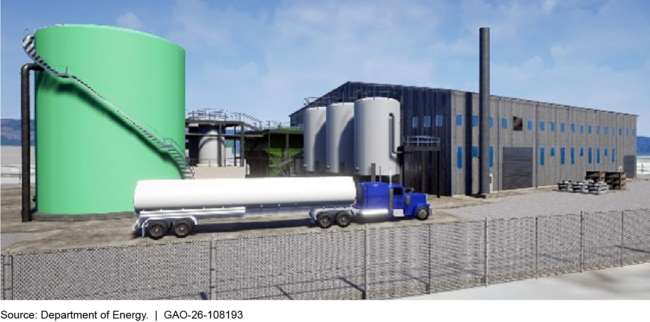
GAO has previously found that the Department of Energy’s (DOE) Office of Environmental Management (EM) has not followed its standards for defining mission need for some large projects. A mission need statement documents DOE’s identification of a mission-related need and, according to DOE standards, should not identify a particular solution. This ensures that DOE does not limit potential solutions at the project initiation stage. However, the majority of mission need statements that GAO reviewed for EM’s large projects identify a particular solution. For example, the mission need statement for the Outfall 200 Mercury Treatment Facility project at the Oak Ridge Reservation proposed “a new mercury treatment facility.” EM officials said they did not see an issue with identifying a solution at the mission need stage because other solutions are explored in later planning stages. However, GAO found instances where EM did not consider or pursue potential cost-saving options as project planning continued because a preferred solution was identified in the mission need stage.
Rendering of the Outfall 200 Mercury Treatment Facility, a Large Capital Asset Project at the Oak Ridge Reservation
Legal and regulatory constraints are one factor that has limited what solutions EM has considered for some large projects. For example, experts in GAO’s discussion groups said that EM did not pursue a cheaper yet technically sound treatment for one type of radioactive waste at the Idaho National Laboratory due to an existing agreement with regulators. Instead, EM spent taxpayer money over many years pursuing a solution it ultimately deemed suboptimal and suspended.
EM follows internal review steps before approving mission need for large projects, but the reviews do not include independent experts. Including independent members with relevant expertise in the agency’s oversight structure can provide an impartial evaluation of its ability to achieve objectives. By incorporating independent experts outside of DOE who are not involved in EM’s legal and regulatory agreements into its mission need review for future large projects (before agreeing to a solution with regulators), EM could better ensure it is considering all viable solutions, including less costly ones.
Why GAO Did This Study
EM manages cleanup of hazardous and radioactive waste, in part through facility construction, building demolition, and other capital asset projects. The total costs for EM’s most expensive capital asset projects have grown by more than $2 billion since 2022 and at least five EM sites anticipate needing future projects that will likely cost over $100 million each. DOE acquisition management has been on GAO’s High Risk List for decades because of its vulnerability to fraud, waste, and abuse.
Senate Report 118-188 includes a provision for GAO to evaluate EM planning for large capital asset projects and factors considered in its planning. GAO examined (1) the extent to which EM has defined the mission need for its large projects in accordance with DOE’s project management standards and (2) the factors that influenced the range of solutions EM considered for selected large capital asset projects.
GAO analyzed 21 EM mission need statements for large projects—estimated to cost at least $100 million—to determine if they identified a particular solution. GAO analyzed qualitative content from three expert discussion groups covering EM’s planning for selected large projects. Twelve experts from academia, the national laboratories, and the private sector participated in one or more discussion groups. GAO interviewed EM headquarters officials and field staff at EM sites with large projects.
Recommendations
GAO recommends that for future large projects DOE (1) ensures that the mission need is revised if it includes a predetermined solution and (2) includes independent experts in the mission need review before agreeing to a solution with regulators. DOE concurred with both recommendations.
Recommendations for Executive Action
Open
Open
| Agency Affected | Recommendation | Status |
|---|---|---|
| Department of Energy | The Assistant Secretary for EM should ensure that the mission need for future large projects does not identify a particular solution and is revised as necessary before approval so that EM initiates projects that are open to a broad range of potential solutions. (Recommendation 1) | |
| Department of Energy | The Assistant Secretary for EM should incorporate independent experts outside of DOE into the mission need review stage for future large projects subject to the critical decision process, or the investigation stage for CERCLA cleanups with a high likelihood of resulting in a large capital asset project, to ensure that EM is not limiting potential solutions due to legal and regulatory constraints, influence from contractors, or existing projects. (Recommendation 2) |
Full Report
(1 page)
(44 pages)
GAO Contacts
Nathan Anderson
Director
Natural Resources and Environment
Media Inquiries
Sarah Kaczmarek
Managing Director
Office of Public Affairs
Public Inquiries
Topics
Capital assetsNuclear waste cleanupProject managementConstructionEnvironmental managementAnalysis of alternativesRadioactive wastesProject planningDisposal facilitiesDemolition (military)
这条对你有帮助吗?