The 100k Whys of AI
摘要
文章围绕一个争论展开:能否可靠区分人类写作与 AI 生成文本。作者认为,尽管 LLM 本质是对人类语言的统计建模,但现实中并非完全 “不可区分”。他用亚马逊搜索 “100000 whys” 出现的大量相似儿童科普书封面作为例子,指出在相似提示词下,AI 生成内容会呈现高度重复的标题与视觉模式(例如恐龙、火箭、狗等固定元素反复出现)。作者将这种现象归因于模型在不同用户间呈现 “准确定性” 的输出特征,导致内容在结构与风格上趋同。他进一步提出,LLM 写作的特征不在于单个表达是否像人,而在于在多数提示下会收敛到同一组复杂但有限的表达方式,因此在实际场景中可以依赖这种 “模糊信号” 进行判断。同时他提醒,在内容生产成本极低的情况下,传统 “读者 - 内容” 互动模式可能失效,并调侃若用 LLM 自动写博客,出版物可能变成 “100,000 Whys” 式的内容堆叠。
荐读理由
LLM输出在普通prompt下因模式相近,标题与封面聚类极度相似,易被误当为原创内容
原文
The 100,000 whys of AI
One of the most painful arguments I keep having with fellow techies is the question of whether you can distinguish between human-written and AI-generated text.
Their skepticism is rooted in reason: at their core, LLMs are state-of-the-art statistical models of how humans talk. If so, the output from the model should be almost by definition indistinguishable from human language under any statistical test.
I don’t think this is always argued in good faith; at least some of the debates are started by folks who wish to maintain deniability for their own underhanded use of the tech. But if you sincerely hold this belief, I present you the following collage:
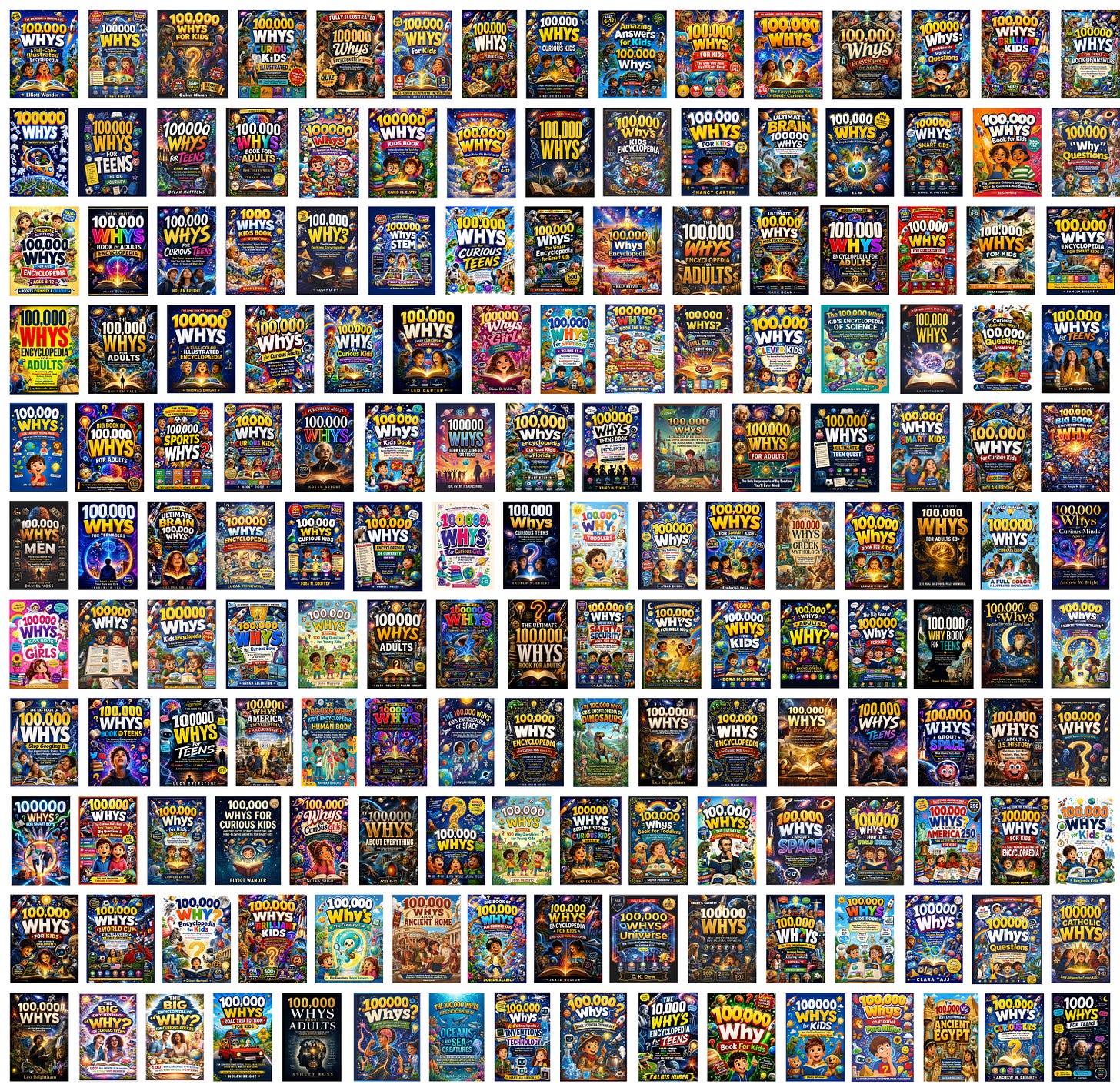
The image shows about 150 Amazon book covers that appear if you search the site for “100000 whys” (link). Some of these books are category bestsellers in children literature. You can view a zoomable, full-resolution version here.
There’s nothing inhuman about any of these titles or covers. At the same time, I probably don’t need to convince you that you’re staring at the purest form of AI slop that now fills up many nonfiction book categories on Amazon. More specifically, what we’re seeing here is the artifact of the tools being quasi-deterministic: if a hundred “authors” give their favorite AI tool a similar prompt — say, *“generate a reference book for children” — *the model will produce functionally identical output perhaps 80% of the time.
The similarities in the collage go far beyond the choice of titles: for example, all the covers in the top row feature a roaring dinosaur in the top left corner of the design. There are many other clusters in the data, too. Look for a recurring red-and-white cartoon rocket, a golden retriever, a lion, and so forth.
This is precisely what makes LLM writing distinctive: it’s not that the models’ individual mannerisms are different from ours. It’s that they resort to the same, complex set of mannerisms in response to almost any normal prompt. This is a fuzzy signal, so you shouldn’t fire your intern when they say “it’s not this — it’s that”. But in more casual settings, it’s OK to trust your gut. In fact, these instincts are becoming increasingly important because traditional models of online interactions fall apart if it takes much less effort to produce content than to engage with it.
PS. If you’re using an LLM to automate blogging: yes, the tech is amazing, but chances are, your publication could be renamed to “100,000 Whys”.
这条对你有帮助吗?